
What is OMS?
Order Management System (OMS) is an essential tool to fulfill orders in an efficient and cost-effective manner. As business grows, it becomes imperative to fulfill, track, and manage the orders in the simplest way so that business does not get lost in the entire process. The entire order fulfillment process can be orchestrated to improve customer experiences and deliver omnichannel order fulfillment.
Common Challenges with Traditional OMS
Order sourcing, allocation, and fulfillment
It is not easy to decide on the smartest fulfillment location based on your inventory and business rules. Hence, many OMS solutions available in the market fail to address real-life fulfillment problems. Retailers need to balance costs against delivery speed, decide when to start shipping the orders, and notify each fulfillment location of which orders to fulfill.
Exceptions
An exception refers to any delay in delivery. Maybe the item is in high demand and went out of stock, or the order was lost. It’s important that the customer is kept informed and that the item is either reshipped promptly or the order is canceled.
Delivery
Customers may want to buy online and pick up in-store, or the company may even be using its stores as warehouses to meet demand, increase inventory turns, and reduce markdowns. That complicates logistics.
Do I Need an OMS?
With technology, customers have become accustomed to the seamless management of orders. An Order Management System is a critical factor in managing all orders and facilitating them for a better customer experience. If you’re using an outdated OMS or need to reduce manual intervention for orders and inventory to scale commerce, Better OMS can help.
Benefits of Better OMS
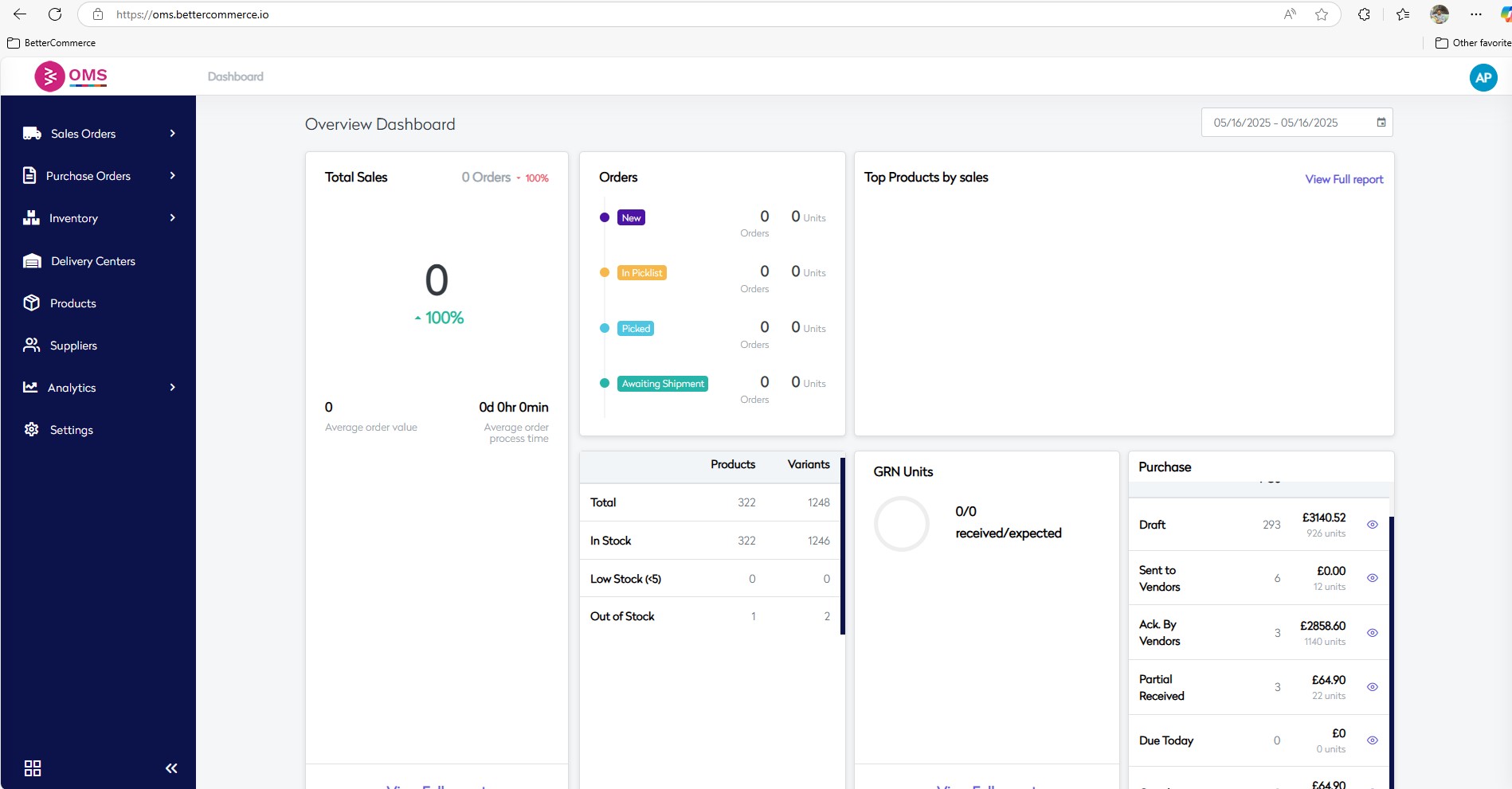
Multiple Sales Channels
The OMS receives and consolidates information from all points of sale. Some products may support one or multiple fulfillment types like Instock, Backorder, and Dropship.
Inventory Management
In addition to providing a consolidated view of inventory, which aids in managing and tracking stock levels, the OMS includes inventory management algorithms that route orders to the appropriate warehouses and identify the best shipping options. An OMS provides data used throughout the inventory management and fulfillment stages, including picking, packing, shipping, and tracking.
Accounting Integration
Data from the OMS flows into your accounting systems like Xero or QuickBooks' general ledger (e.g., accounts receivable and accounts payable), eliminating the need to re-enter information or transfer it to a separate process.
Reduced Rework
Because the same information is used across all areas of the sales and fulfillment process, less data entry is required, and that means less potential for errors.
Analysis
OMS dashboards can inform decision-making by highlighting sales patterns, tracking KPIs, and forecasting sales.
Other Benefits
- Stock Adjustment
- Stock Transfer
- Stock Take
- Stock Lookup
Who Can Use OMS?
OMS is for merchants who want to provide a seamless shopping experience to customers after they have placed their orders. Process the order faster, deliver sooner than ever, and keep inventory levels updated all the time.